Address
304 North Cardinal
St. Dorchester Center, MA 02124
Work Hours
Monday to Friday: 7AM - 7PM
Weekend: 10AM - 5PM
Address
304 North Cardinal
St. Dorchester Center, MA 02124
Work Hours
Monday to Friday: 7AM - 7PM
Weekend: 10AM - 5PM

Crystal, mineralogical name quartz, is a collective term for single crystalline minerals of silicon dioxide (SiO ₂), with a hardness of 6.5-7 and a glassy luster. It is one of the most widely distributed and diverse gemstone families in nature. The ancients called it “water essence” and “water jade”, seeing it as if it had been melted by a thousand years of cold ice; Modern times combine decorative, collectible, industrial, and cultural values, running through the history of human civilization. From pure and transparent white crystals to strangely wrapped anomaly crystals, from the East China Sea to Minas Gerais, Brazil, every crystal is a condensed crystallization of geological time.

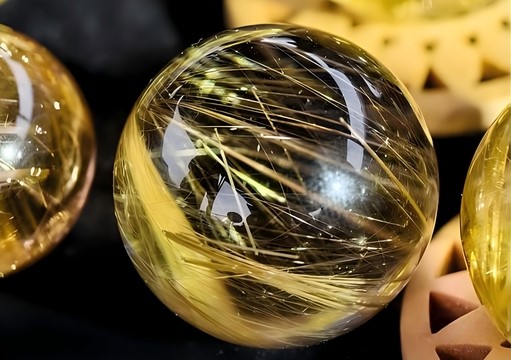
Crystals can be divided into three categories based on color, inclusion, and structural characteristics: pure color crystals, inclusion crystals, and rare special categories, each with its own characteristics.
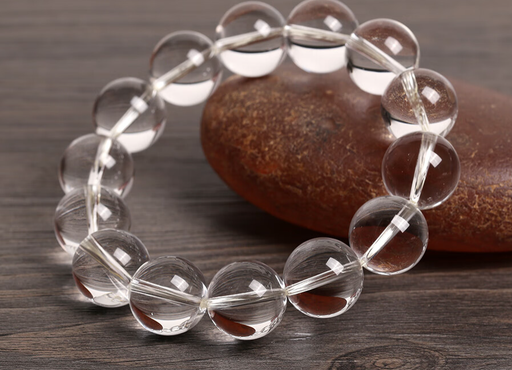
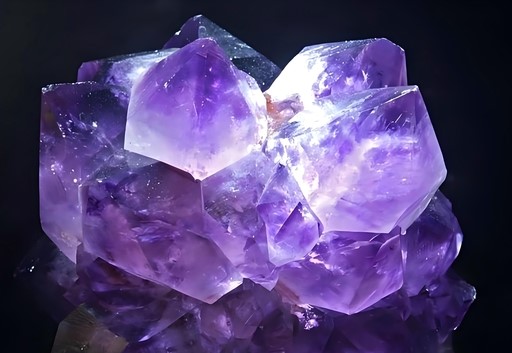
Internally containing mineral or gas-liquid inclusions, each with a unique shape.
Crystals are formed in pegmatite veins, hydrothermal veins, and volcanic crystal caves. Their global origins are concentrated in South America, Africa, and Asia, with different geological environments and crystal styles produced in each region.
More than 90% of the world’s top crystals are produced in Brazil, with core production areas in Minas Gerais and Bahia states. Produce top-level categories such as titanium crystal, super seven, yellow crystal, green ghost, etc., with transparent crystals and complete inclusions; It has the world’s largest crystal cave (3 meters high and 10 meters wide) and the largest single crystal (weighing 40 tons).
Crystal is produced in all 25 provinces and regions of China, with Donghai in Jiangsu Province as the core, accounting for over 60% of the country’s reserves. The silicon content is as high as 99.99%, and the quality of white crystal and green ghost is excellent. It is the world’s largest crystal distribution center and processing center, and the “China Crystal King” (weighing 4 tons) is produced in Donghai. In addition, Yangjiaoling in Tunchang, Hainan, Luodian in Guizhou, Wenshan in Yunnan, and Altai in Xinjiang are also important production areas.
Artigas Province produces the world’s top grade amethyst, with its iconic deep eggplant purple color, high saturation, minimal cotton cracking, and a rich purple red color under sunlight. It is the core source of high-end amethyst.
Produce pink crystal, amethyst, yellow crystal, red rabbit hair, etc. The crystals are warm and the colors are soft, and the quality of starlight pink crystal and red rabbit hair is globally leading.
Large crystal clusters produced in Arkansas, USA; Urals, Russia produce smoky crystals and amethysts; Myanmar produces pure colorless crystals; Switzerland, Mexico, and Sri Lanka also have high-quality crystal production.
Crystals have always had both practical and spiritual value: ancient Egypt and Rome used them to make ritual vessels and wine glasses; In ancient China, objects were regarded as auspicious and were carved into ornaments and ornaments; In addition to decoration, it is widely used in industrial fields such as optics, electronics, and piezoelectric components in modern times.
From geological formation to cultural carving, crystals carry the natural craftsmanship and human aesthetic wisdom. Whether it’s entry-level white crystal, powder crystal, or collectible titanium crystal, Super Seven, they have become timeless gem classics with their pure and transparent texture and unique connotations.
